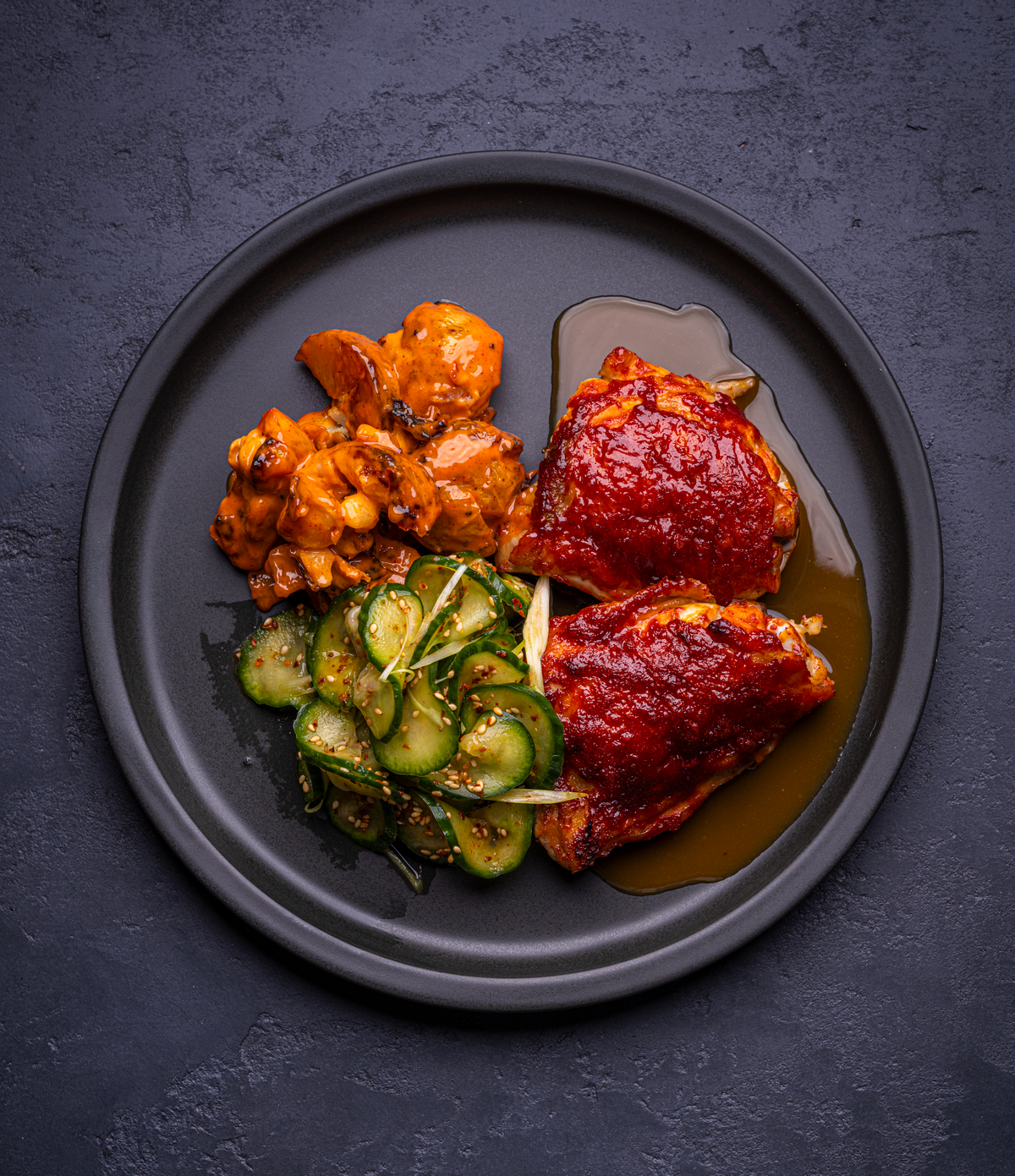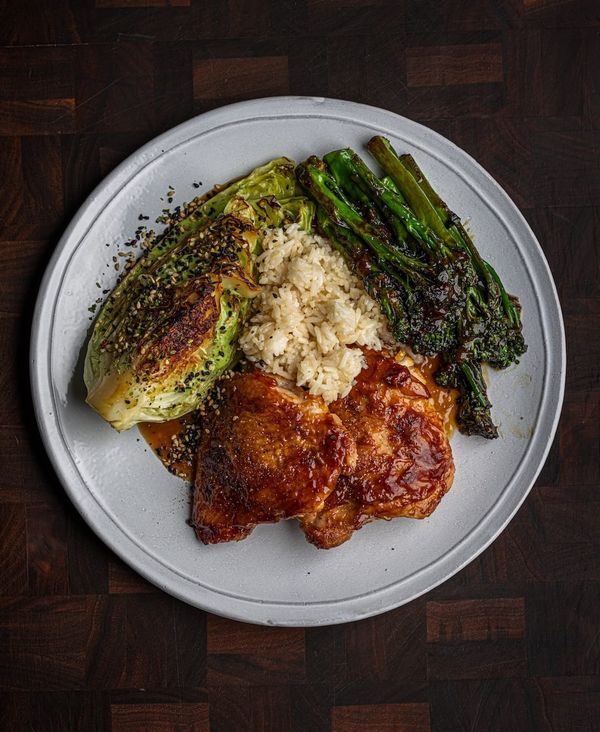
Gochujang Chicken Thighs & Soju Pan Sauce

Gochujang Chicken Thighs & Soju Pan Sauce

Two ingredients. Three side dishes. One very good pan sauce.

This is the third round of testing on the two ingredient chicken. Salt and gochujang. That's the whole seasoning list. No marinade, no dry brine, no five hour project. Just a cold pan, a bit of patience and a spoonful of chilli paste.

The technique is the part worth learning. Skin side down into a cold, dry pan, no oil, heat set to about two out of ten. The fat renders out slowly instead of seizing up, the skin goes properly crisp rather than leathery, and when it's ready it releases itself from the pan. If you're prising it off with a fish slice, it isn't done. Wait.

Gochujang does the rest. It brings heat, but it's a rounded, fermented, slightly sweet heat that sits behind the chicken instead of shouting over it. Painted on before the oven goes to work, it tightens into a glaze. Stirred into the pan afterwards, it becomes the backbone of the sauce.

And there will be a sauce, because I'm not pouring away a pan full of rendered chicken fat and fond (or strictly speaking, sucs, because technically fond is the bit after the deglaze). That's a whole flavour base sitting there for free. It also means we're going on a small side quest: the cucumbers you pickle for the side dish give up a sharp, sweet liquid, and that liquid is the secret weapon that finishes the sauce.

Right. Let's cook.


A few things to know before you start

  • Cold pan, no oil: This is kind of optional. You can of course use a more traditional method of adding oil. What's not optional is that if you're doing a cold pan you do need to start low. A hot pan tightens the skin before the fat has a chance to render and you'll end up with a chewy result. Cold pan, low heat, let it come up together.
  • Dry the skin: Salt the thighs lightly right before cooking, then dab the skin dry with kitchen paper right before it hits the pan. Moisture is the enemy of crisp.
  • Optionally air dry in the fridge: For the ultimate chicken experience (crispier skin, juicy chicken) salt the skin 8-48 hours before cooking and leave it uncovered in the fridge on a rack. The air flow will dry that skin whilst the salt penetrates and breaks down the proteins before cooking. This is inspired by Thomas Keller's roast chicken method.
  • Chicken thighs: Skin on, always. Bone in or boneless both work, boneless just cooks a little quicker.
  • Gochujang: Brands vary a lot in heat and sweetness. Taste yours first and adjust. It also contains a decent amount of sugar, which is why the pan goes to a low heat before it goes in. Burnt gochujang is bitter and there's no coming back from it.
  • Soju: Traditional and cheap. Sake works, and dry white wine works if you have neither, though you'll lose a little of the clean sweetness.
  • Temperature: 75°C in the thickest part. A probe thermometer takes all the guesswork out of this.
  • Timing: Pickle the cucumbers and boil the potatoes before you start the chicken. Everything after that happens fast.
  • Save the fat: Strain off roughly 80% of the rendered chicken fat and keep it in a jar in the fridge. Roast potatoes in it, fry eggs in it, thank me later.